Hardware And Software Integration, Covering Multiple Application Scenarios
 2026-10-22
I. Client Background
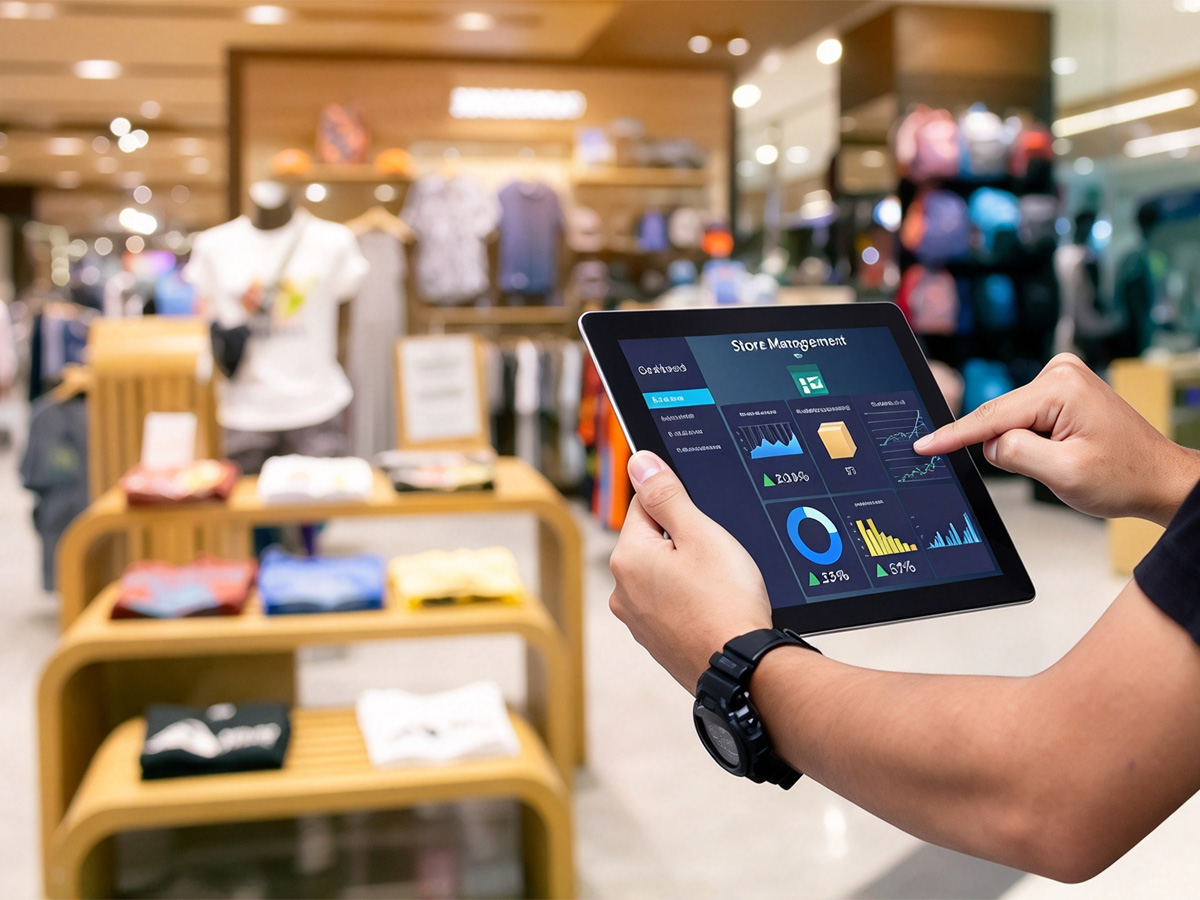
JD Sports, a UK sports and fashion retailer, operates both men's and women's apparel and sportswear. It owns more than 120 directly operated stores, each with over 20,000 SKUs (covering multiple sizes and colors). Its business spans physical stores, e-commerce, and omnichannel models such as "online ordering with in-store delivery" (BOPIS / SFS), placing extremely high demands on real-time inventory visibility and inventory counting efficiency.
II. Operational Pain Points
Prior to the transformation, store inventory management relied primarily on manual barcode scanning, which resulted in the following prominent issues:
Pain spot | Embody |
Low review efficiency | Full-store manual barcode inventory requires 6–8 personnel to work continuously for 6–8 hours; this can only be scheduled before business hours or after closing, thereby consuming labor and affecting display operations. |
Inventory data distortion | Data lag occurs across the receiving, shelving, fitting, and return/exchange processes, resulting in inventory accuracy that has long remained at only approximately 65%–70%. |
Shortages and slow-moving inventory coexist | Best-selling items are out of stock due to size shortages and cannot be restocked in a timely manner; slow-moving items are accumulating inventory and tying up capital. |
Losses are difficult to trace | It is difficult to pinpoint the location of lost goods and detached labels during the fitting room and exit stages. |
Omnichannel fulfillment is challenging | After placing an order online, the item cannot be located offline; BOPIS / in-store fulfillment suffers from slow picking and a high rate of incorrect shipments. |
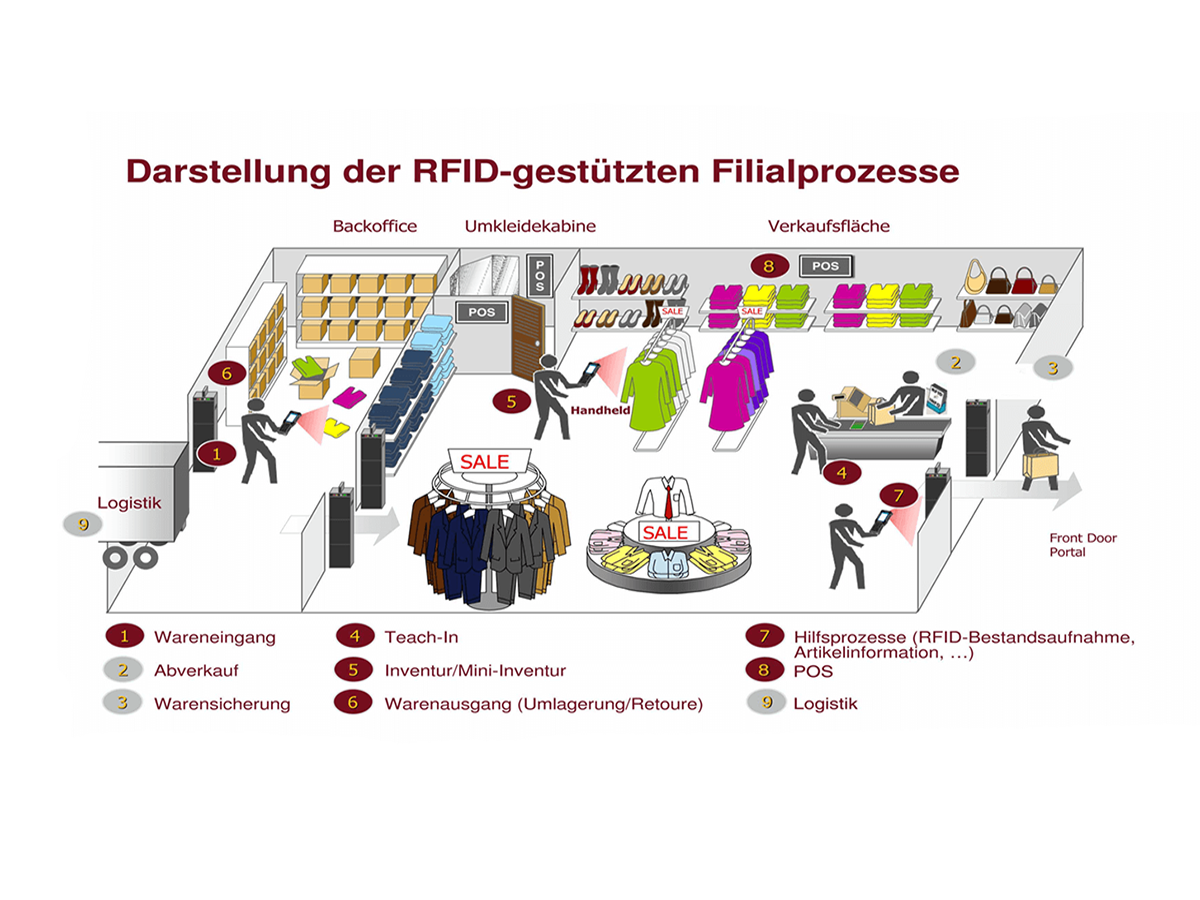
III. Solution: Five-Step UHF RFID Closed Loop
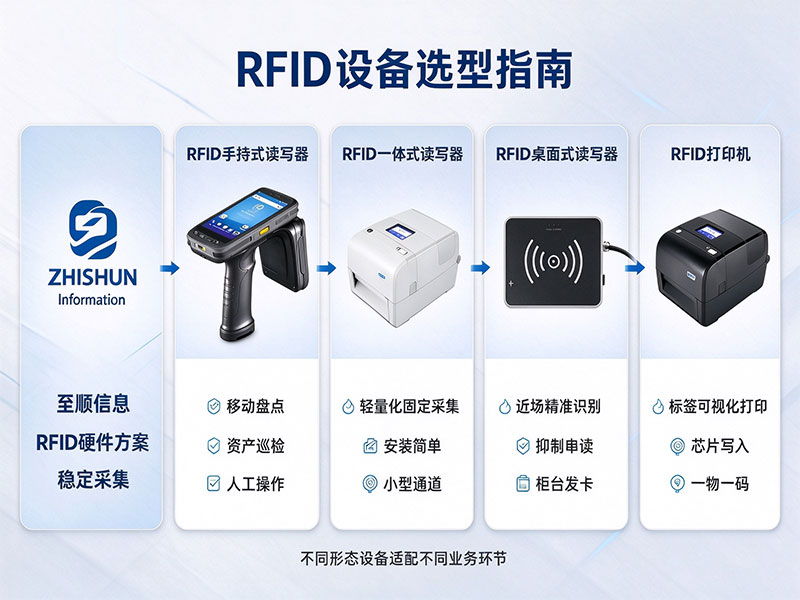
The project centers on UHF RFID item-level tags and spans the entire process—from card printing and issuance, receipt, inventory counting, fitting and anti-theft measures, to checkout and omnichannel operations—thereby creating a closed data loop:
1. Label Printing and Data Binding
Use a desktop RFID tag printer to print and write tag codes; integrate it with a desktop card issuer to import SKU, size, and color data with a single click via Excel, thereby completing batch binding under the "one item, one code" model and eliminating errors caused by manual data entry.
2. Receipt and Warehousing
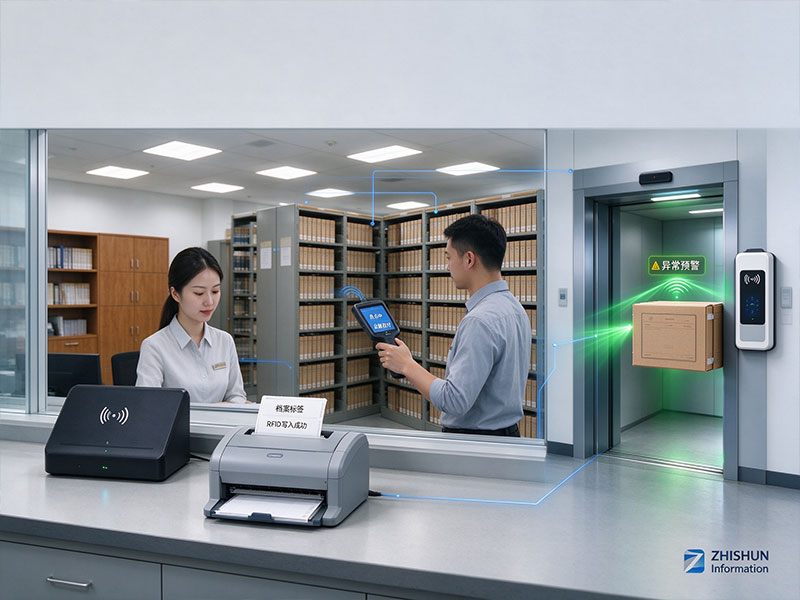
Fixed readers are deployed in the store's rear warehouse; entire cases are scanned and automatically verified for arrival quantities, reducing inbound processing time by more than 80%.
3. Store Inventory Count
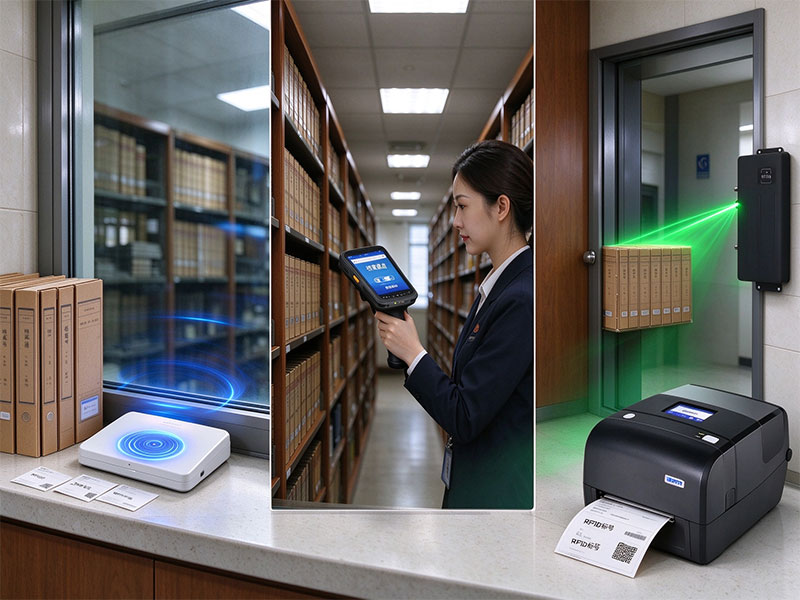
Before business hours or after closing, 1–2 store staff members use UHF RFID handheld terminals to conduct a walk-through inventory of the entire store; there is no need to scan each item individually, and the full-store inventory can be completed within 30 minutes.
4. Fitting Room and Exit Security
Install fixed readers in the fitting room and at the exit to monitor customers' product fitting in real time, enabling anti-theft alerts, recommendations for missing items, and the accumulation of fitting data.
5. Cashiering and Omnichannel
The checkout terminal reads multiple labels at once and processes checkout in seconds; inventory data is written back in real time to the ERP and the omnichannel middle platform, supporting BOPIS, in-store shipping, and inter-store transfers.
IV. Implementation Pathway (approximately 4 weeks)
Week 1: Select three stores for pilot implementation; launch label printing, card issuance and binding, and handheld inventory counting; and validate inventory counting efficiency and inventory accuracy;
Weeks 2–3: Complete the installation of fixed readers at the fitting room and exit, interface the checkout counter, and debug data write-back;
Week 4: Store-wide promotion; conduct staff training and standardize operational procedures.
V. Quantified Results (Example Data)
Metric | Prior to implementation | After implementation |
Store-wide inventory count time | 6–8 people × 6–8 hours | 1–2 people × within 30 minutes (speed increased by approximately 10×) |
Inventory accuracy rate | Approximately 67% | Over 99% |
out of stock rate | Benchmark level | Decrease by more than 50% |
BOPIS / Store Picking | Track each item individually | Speed increased by approximately 5× |
Reviewing Labor Costs | Benchmark level | Save over 80% |
Same-store sales | Benchmark level | Increase by 3%–5% (improved product availability) |
VI. Future Upgrade Directions
1. Smart fitting-room recommendations and an intelligent shopping guide display screen;
2. Unattended / self-service checkout;
3. Extend upstream into the supply chain: enable end-to-end, item-level visibility from factory shipment through the general warehouse to retail stores;
4. Optimize product selection and display based on foot traffic and fitting data.
If your store is also struggling with inventory counting, stockouts, and omni-channel fulfillment, feel free to contact us for a customized RFID apparel store implementation solution.

Appendix: Reference to Publicly Available Industry Data
The following are results from comparable RFID apparel retail case studies published through public channels, provided for reference in solution planning and expected-value management:
Case | Key Achievements | Source |
Li Ning × Dongji (6,000+ stores) | Accelerate throughput by 10× and achieve an inventory accuracy rate of over 99% | Seuic Official Website Case Page |
Something Beautiful (Fashion Retail) | Inventory accuracy increased to 99%+, and inventory counting time reduced by 80% | RFID Dipole Blog |
North American 500-store chain retailer | Inventory accuracy: 67% → 99.2%; stockouts reduced by 53%; same-store sales increased by 4.2% | RFIDHY Case Study |
American Apparel | Summary: reduced from 6–8 people × 6–8 hours to 2 people × 2.5 hours | Zebra RFID Retail White Paper |
Omnichannel retailer | Reduce picking time by 50%; increase sales by 5%–10%; increase labor productivity by 15%–25% | RFID Journal Case Study |

Scan To Add

Scan To Add
Copyright © 2026 Shenzhen Zhishun Information Technology Co., Ltd All Rights Reserved.
Technical Support:SYSX





 182-7997-4925

 Home