Stay Informed About Industry News And Follow ZhiShun Updates
 2025-11-28

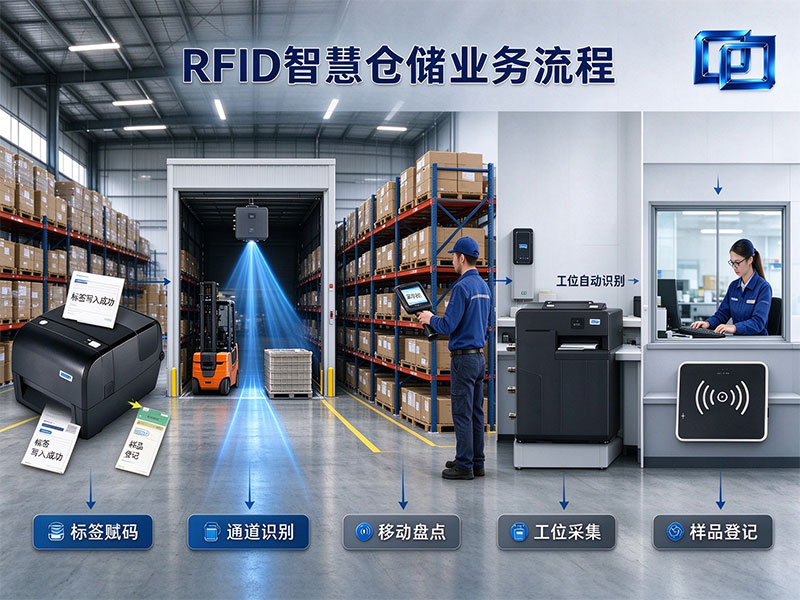
Image Suggestion: Warehousing flowchart | Visual workflow in sequence: RFID printer tag printing → fixed reader for channel inbound & outbound → handheld reader for shelf inventory → integrated reader for station identification → desktop reader for sample registration
Image Caption: Workflow diagram of RFID smart warehousing. A hardware portfolio realizes closed-loop management including tag encoding, channel identification, mobile inventory, station collection and sample registration.
Traditional warehouse management relies on manual barcode scanning, which is plagued by inbound/outbound congestion, long inventory cycles, frequent accounting errors and missing records. An increasing number of logistics centers, raw material warehouses and finished goods warehouses adopt complete RFID hardware solutions for renovation, forming a closed loop of “tag printing — automatic channel collection — mobile inventory — counter registration”.
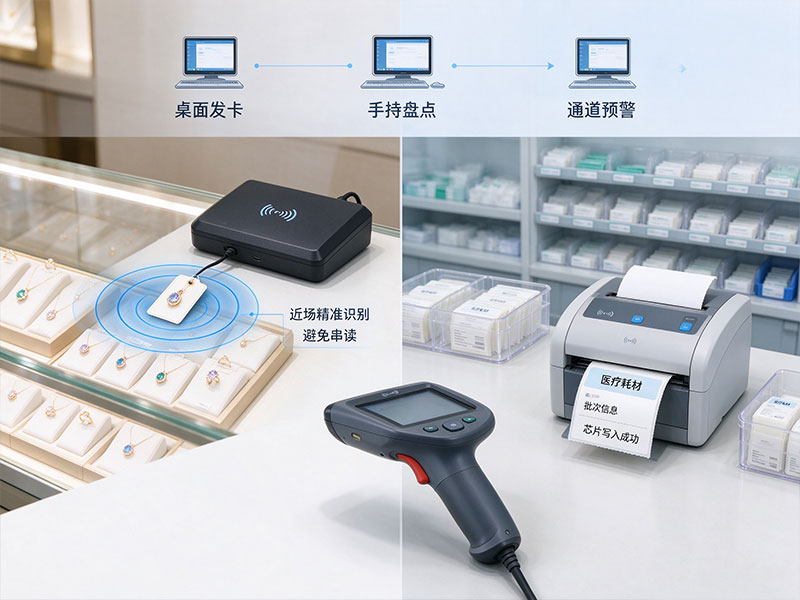
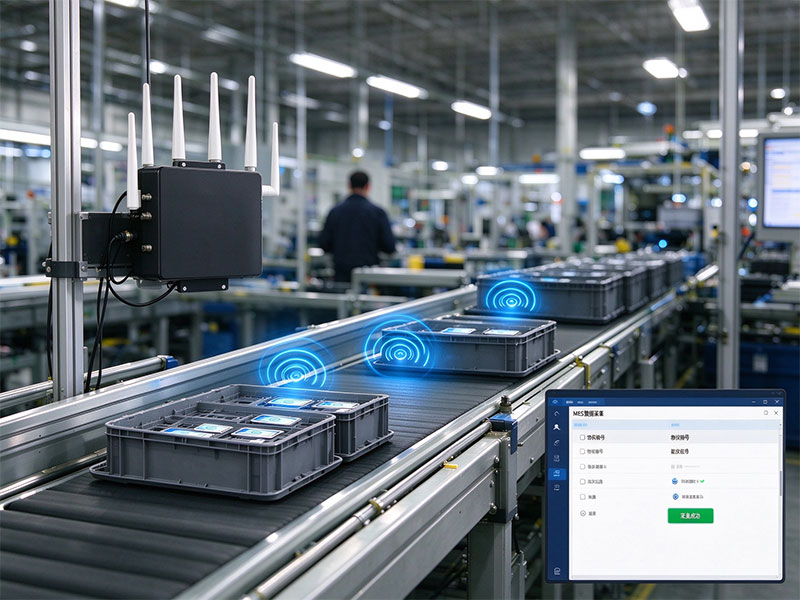
Within the full RFID warehousing solution, different devices have clear divisions of work. At the inbound stage, RFID printers print and write information onto tags for pallets, turnover boxes and individual goods in batches to complete encoding. RFID fixed readers are deployed at warehouse gates and sorting junctions. Goods are automatically identified when passing through channels, and the system completes inbound and outbound registration without stopping for scanning. Warehouse staff use RFID handheld readers for daily shelf scanning, comparing stock with the system with one click and exporting discrepancy lists in real time. Integrated RFID readers can be deployed at small stocking zones and quality inspection stations for automatic material identification. Desktop RFID readers are equipped at quality inspection and sample registration windows for precise sample information registration and avoiding interference from adjacent tags.
The core value of this solution is not replacing barcode guns with single devices, but the collaborative work of different RFID readers: fixed readers undertake “unattended automatic circulation”, handheld readers for “dynamic inventory verification”, integrated readers adapt to automation at small points, desktop readers for refined registration, and RFID printers guarantee standardized tags at the source.
At present, common pain points in industry implementation focus on RF interference, tag consistency and protocol compatibility between devices. Prioritizing full-series RFID hardware from the same brand with unified SDK can greatly reduce integration development workload and lower later commissioning and maintenance costs, which is also the choice of a growing number of integrators.

Scan To Add

Scan To Add
Copyright © 2026 Shenzhen Zhishun Information Technology Co., Ltd All Rights Reserved.
Technical Support:SYSX





 182-7997-4925

 Home